
Bhutan’s Masked Dancers
I didn’t first arrive in Bhutan to chase performances with my camera. I’ve been fortunate enough to visit several times now, both on my own and leading small photography groups, and it never quite settles into something predictable.
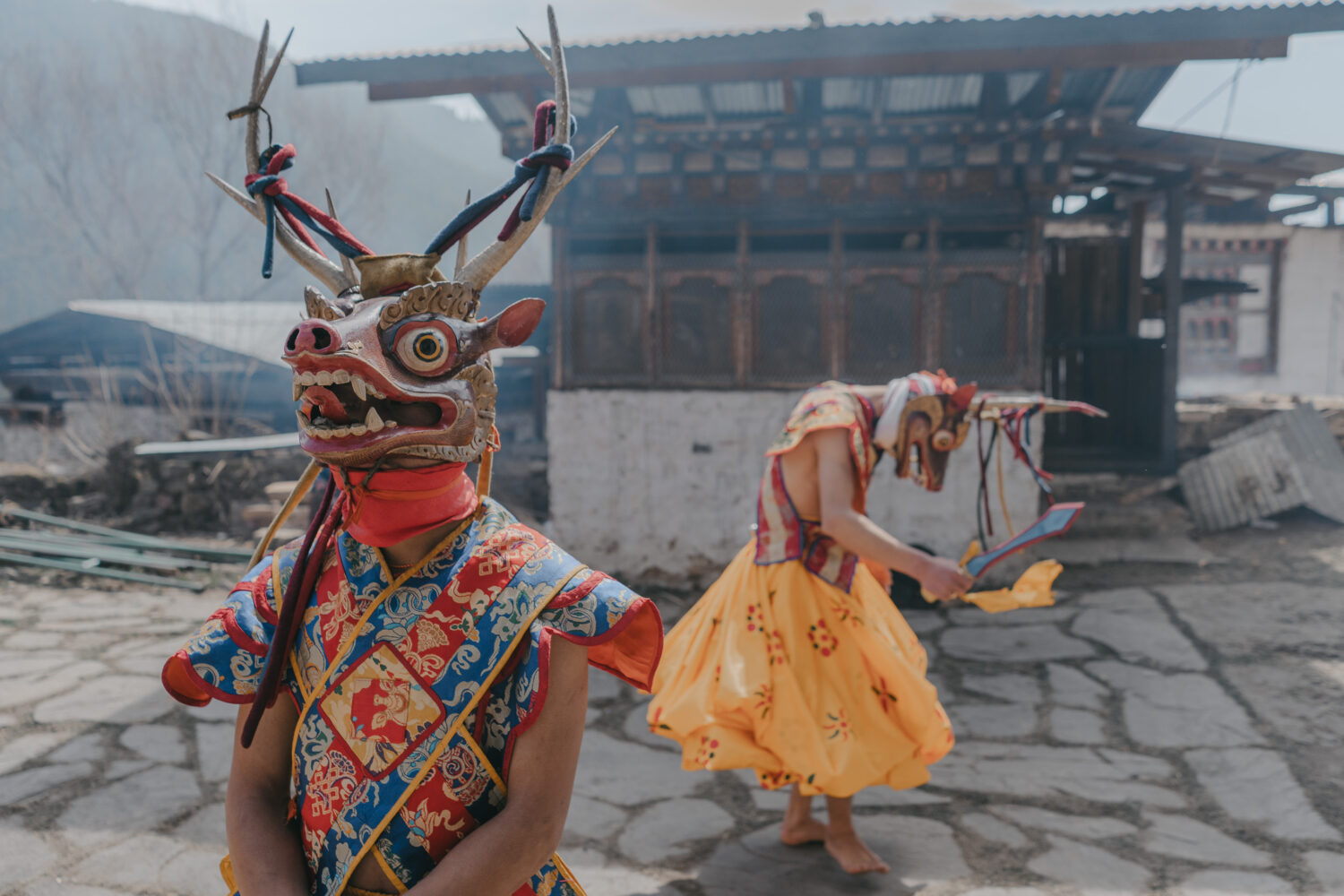
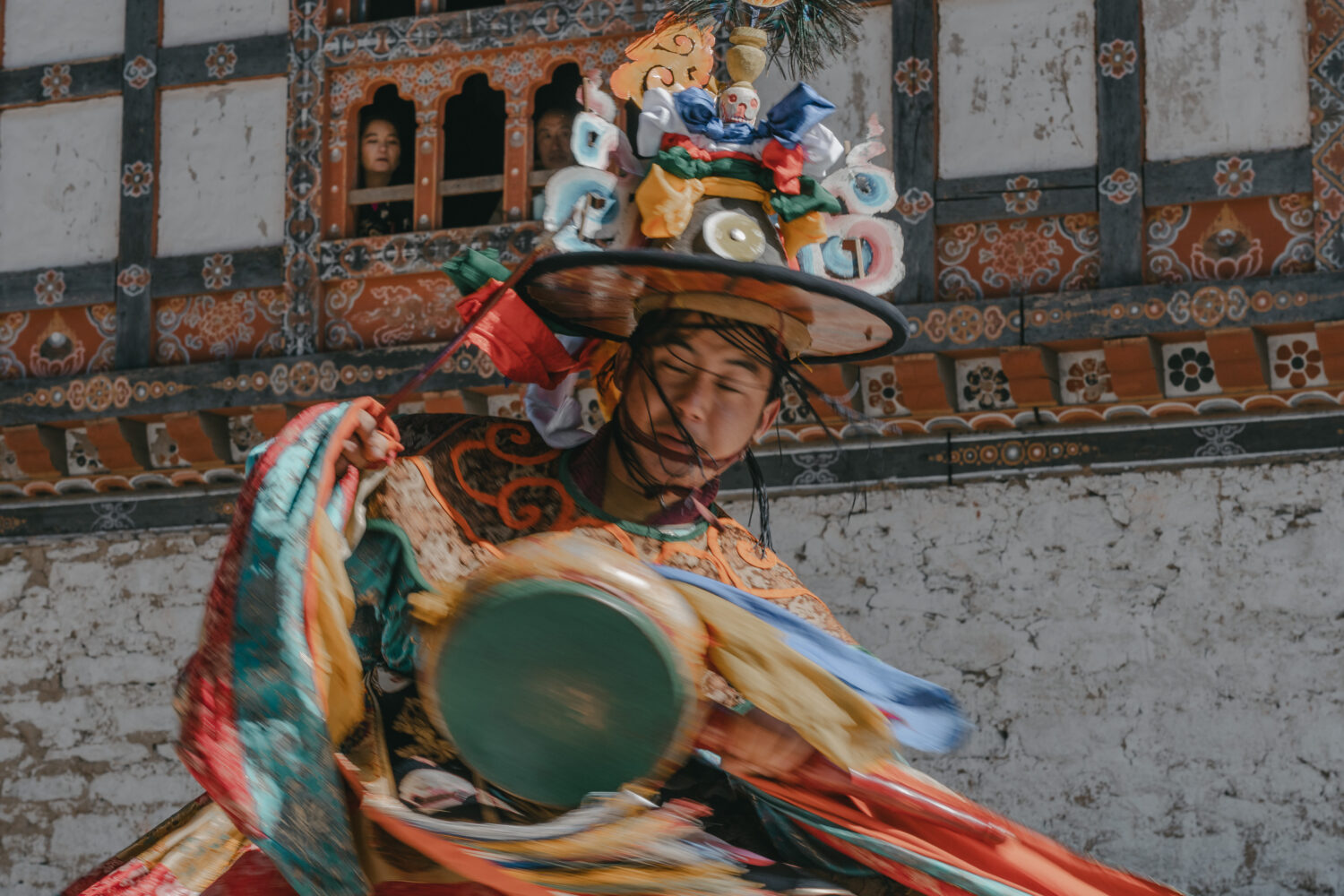
What happened was something totally different. The masked dances, Cham, aren’t staged as entertainment in the way we usually think of performances. They’re woven into daily life, you feel that right away. The courtyard fills up, musicians strike up their tunes, and you’re not just watching anymore – you’re swept into a rhythm people have been living for generations.
At first, it’s the masks themselves that grab your attention. Up close, they’re almost overwhelming: bold colours, exaggerated faces, layers of detail that take a moment to digest. But pretty soon, you stop focusing on the masks. It becomes about everything moving together – the dancers, the crowd, wisps of smoke floating across, sound bouncing off old stone walls.
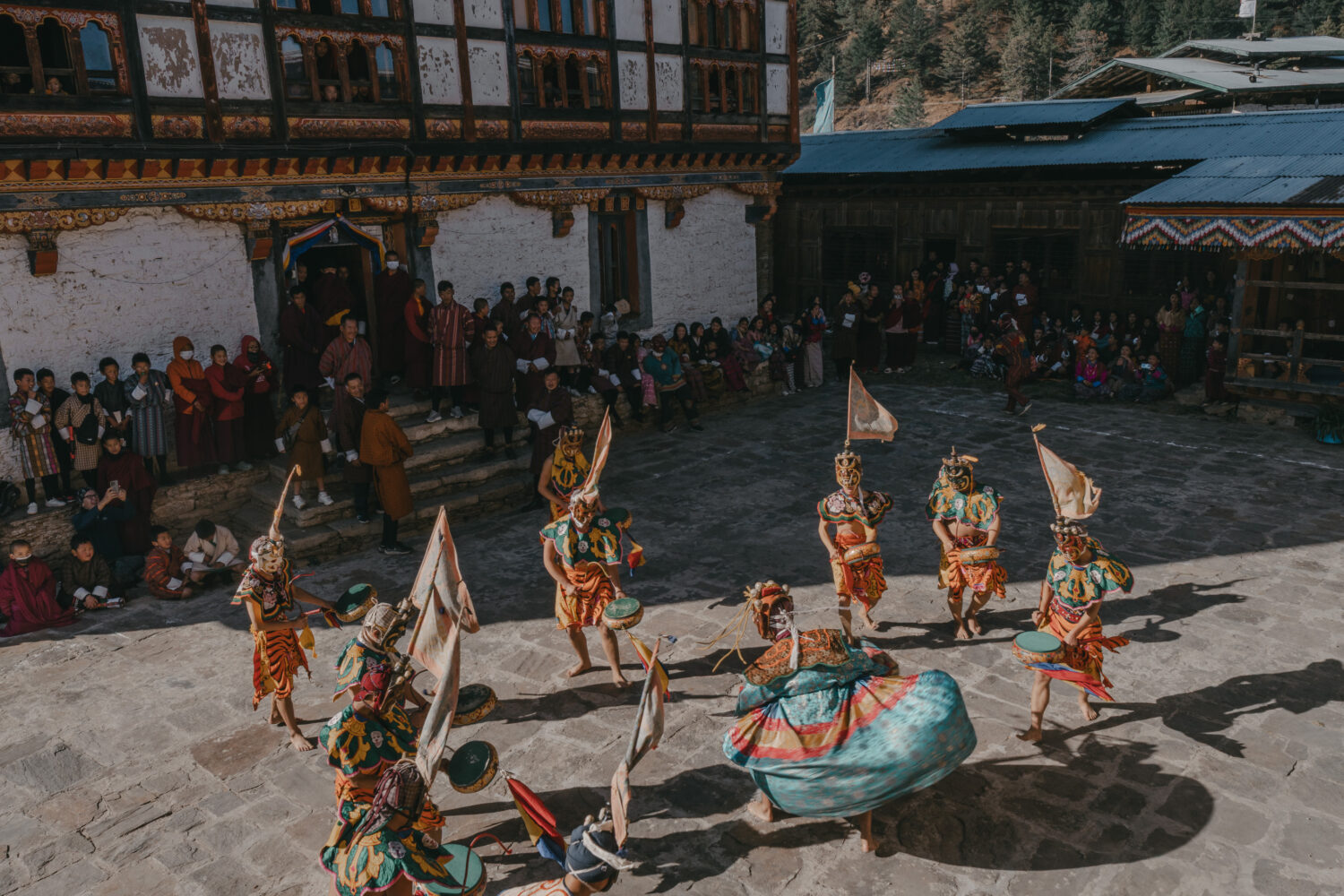
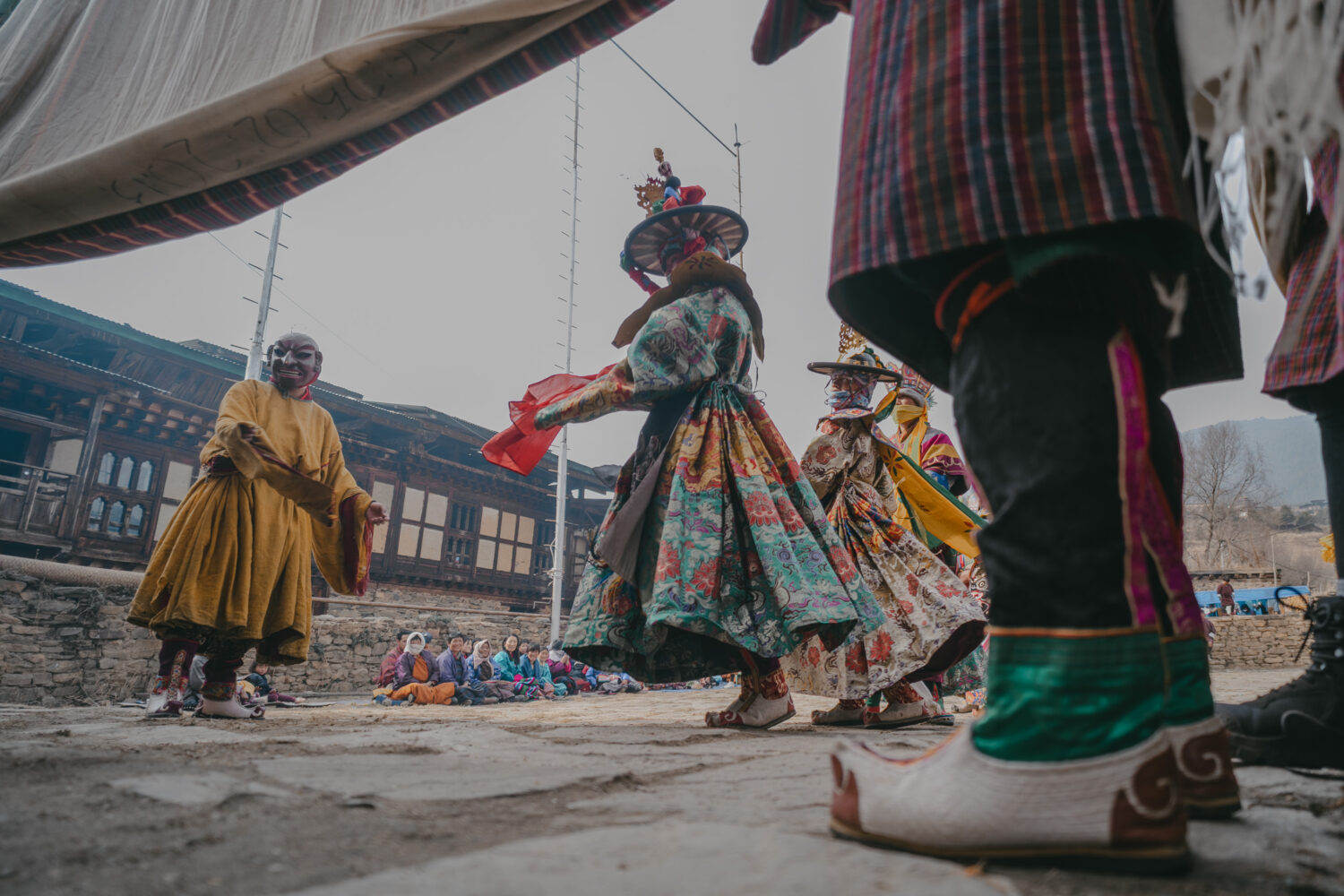
There’s no sharp line between the dance and everyone around it. Kids perch at the edge, distracted but curious. Older folks zero in on every step, totally absorbed. Monks slip in and out of sight, part of the dance at times, silent observers at others. All of it bleeds together.
For a photographer, it’s unpredictable – never easy. Light shifts constantly. Sometimes you get soft, smoky glow, then suddenly the sun blazes through and throws hard shadows across the courtyard. Next thing you know, you’re inside, nearly in darkness, watching dancers get ready in total silence. There’s no chance to control any of it – and honestly, that’s what makes it exciting.
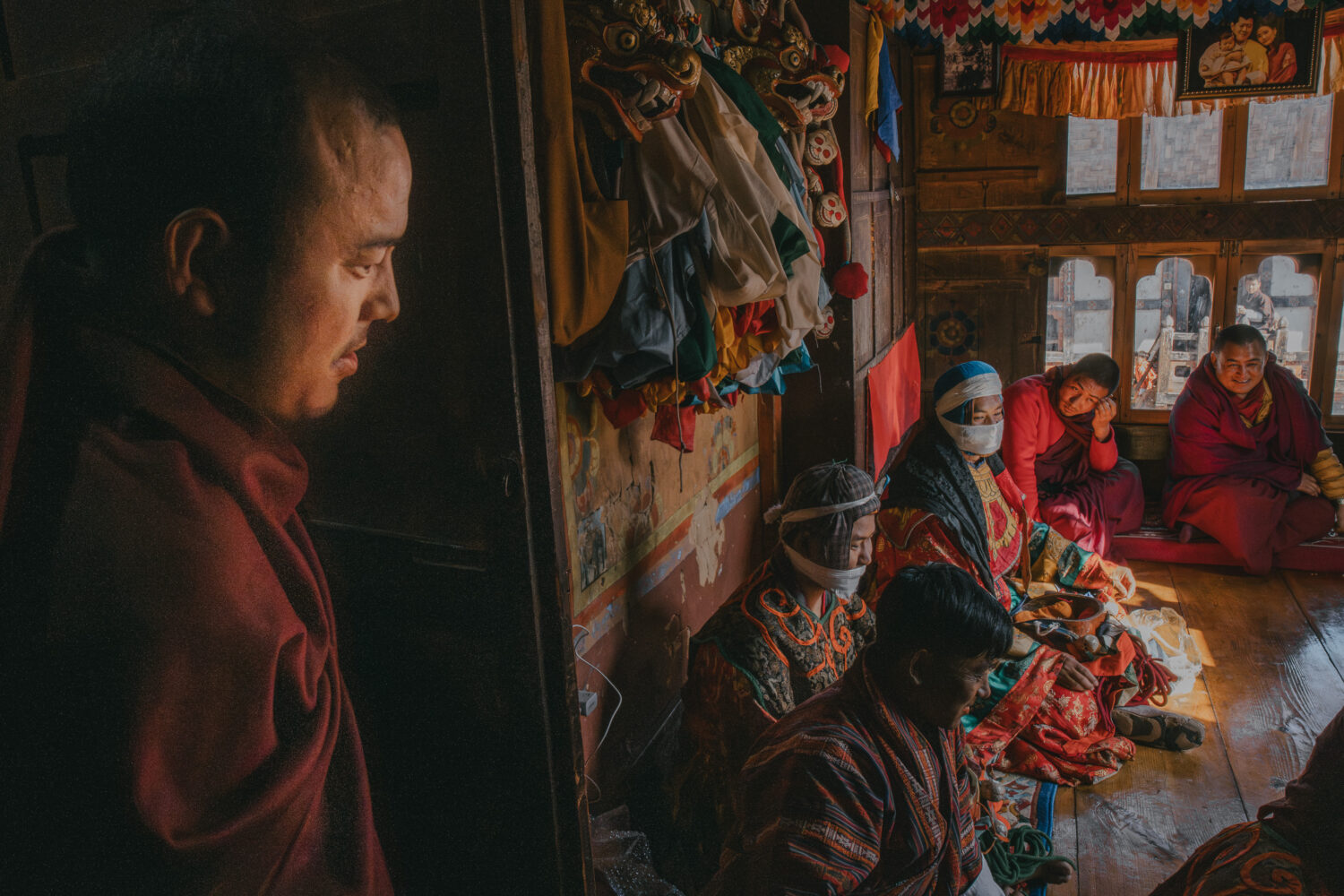
My favourite moments usually weren’t in the thick of the performance. Maybe it was a dancer adjusting a mask in a doorway, a group just hanging out on the floor between dances, a boy leaning from a window, engrossed in whatever’s happening below. Those frames stick with me more than the “big” shots.
Then evening comes, and everything changes.
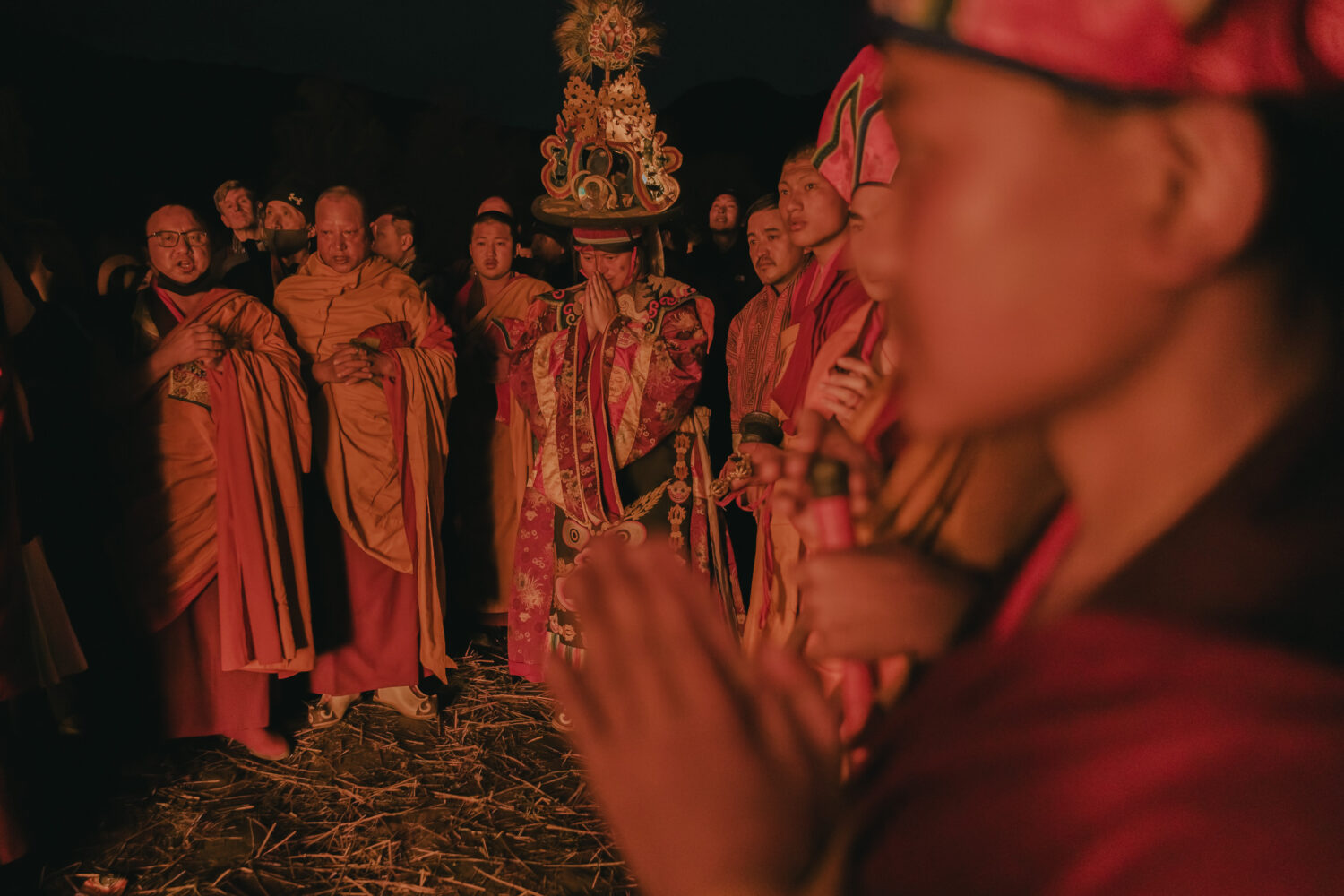
The energy shifts. Fires crackle, the air cools, things get tighter somehow. What was open and easy during the day turns intense at night. Firelight carves out pockets of brightness, separating faces, making the whole thing feel almost theatrical – though nothing about it is rehearsed. You react differently without realizing it. You slow down. Decisions come more deliberately. Instead of trying to capture every single thing, you just respond, moment by moment.3
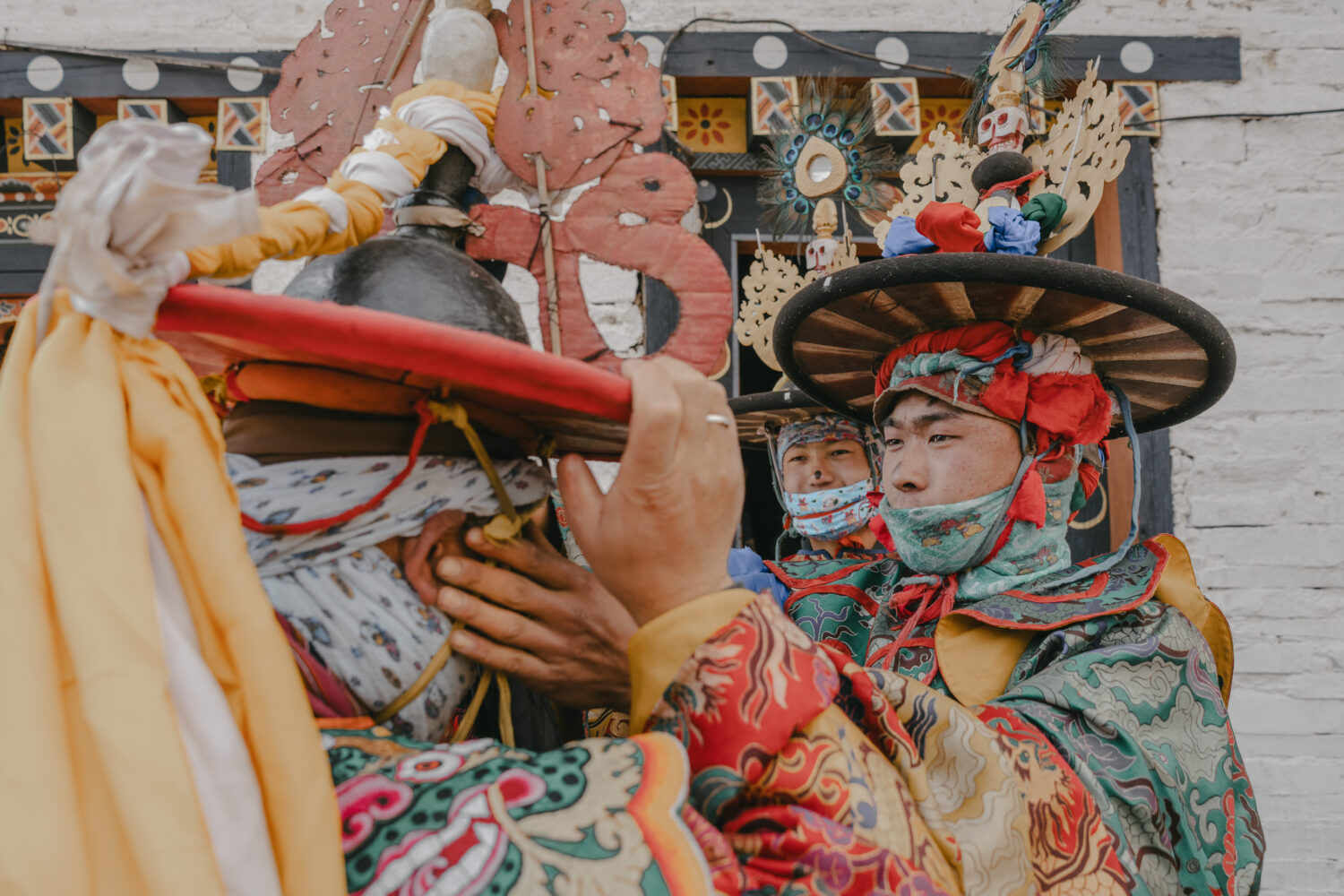
Honestly, that’s Bhutan’s biggest gift. It makes you pare things back. When you travel somewhere like this, the instinct is to collect everything – every costume, every dance, every detail. But after a while, I realized that’s not what matters. It isn’t about covering all the bases; it’s about connecting. Noticing the quiet stuff that happens in the spaces between. How the sunlight hits a wall. The pause before a dancer steps back into the crowd. The hush most people miss. Those are the honest images.
Check out my Bhutan’s Masked Dancers portfolio